Egypt continues to attract investor interest despite ongoing global and regional volatility, supported by structural reforms, high-yield dynamics, and improving medium-term macroeconomic prospects, according to Badr Al Saraf, Head of Macro Strategy for the Middle East at Standard Chartered.
Speaking on the sidelines of Standard Chartered’s Global Research Briefing, Al Saraf told Business Today Egypt that Cairo has recorded net portfolio outflows of around $10–12 billion since the onset of regional geopolitical tensions, noting that capital flows remain highly sensitive to global risk sentiment.
He added that while investors tend to exit during risk-off episodes, inflows typically return when global conditions stabilize, supported by Egypt’s attractive yield environment and long-term economic narrative. He said the scale of outflows has also moderated over time, reflecting a gradual normalization in volatility patterns.
Al Saraf stressed that sustaining investment momentum depends primarily on consistent reform implementation and maintaining an investor-friendly policy framework, particularly as global investors increasingly prioritize regulatory stability, transparency, and return visibility.
On foreign direct investment, he said Standard Chartered expects continued improvement in FDI momentum, driven by growing interest from investors across Asia, the Middle East, and Western markets.
He added that investor appetite remains broad-based across sectors, including renewable energy, manufacturing, logistics, banking, finance, and technology, supported by Egypt’s strategic geographic position as a regional trade and investment hub connecting multiple markets.
On fiscal dynamics, Al Saraf said Egypt’s deficit is expected to narrow to around 7% of GDP in the next fiscal year, compared with an estimated 7.5% in the current year, driven by efforts to broaden the tax base rather than raise tax rates. He noted that digitalization initiatives are playing a key role in improving tax efficiency and expanding the formal revenue base.
Commenting on external accounts, he pointed to continued support from remittances and tourism, while noting that higher global oil prices remain a pressure point on the current account. He also said recent clearance of arrears to international oil companies is expected to support domestic energy production over the medium to long term.
On the exchange rate, Al Saraf expected a move toward around EGP49 per dollar by year-end, noting it would represent a positive signal, emphasizing that the currency operates under a flexible regime driven by supply and demand dynamics.
He also said Egypt’s engagement with the International Monetary Fund (IMF) remains important not only for financing, but also for technical coordination and reform monitoring, with continued cooperation expected as policy implementation progresses.
He added that inflation is expected to remain elevated over the coming period, with single-digit levels unlikely before the end of 2027. Inflation is forecast to average around 13–14% in 2026, before temporarily rising into the mid-teens toward the end of the year, reaching around 16–17% in November and December.
He noted that this reflects continued price pressures in the near term, while the Central Bank of Egypt continues to treat inflation as its main policy anchor and closely monitors monetary transmission across the economy.
BY THE NUMBERS | Al Saraf’s remarks to Business Today on Egypt
* $10–12B estimated portfolio outflows since regional tensions
* 7.5% of GDP fiscal deficit forecast for current fiscal year
* 7% of GDP fiscal deficit forecast for next fiscal year
* EGP49/$ expected exchange rate by year-end
* Asia, Middle East, West identified as key sources of future FDI
* Energy, manufacturing, logistics, finance, technology among the sectors attracting investment

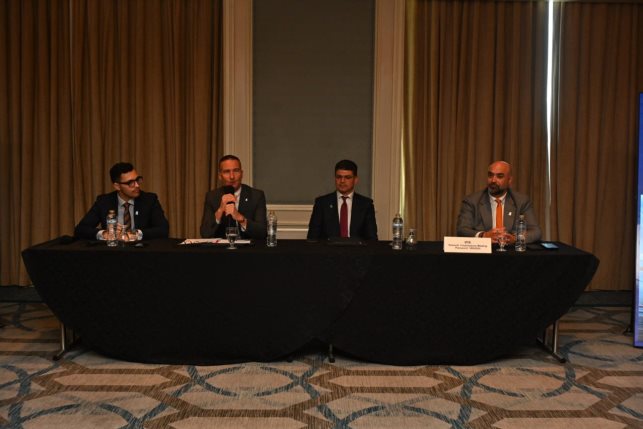
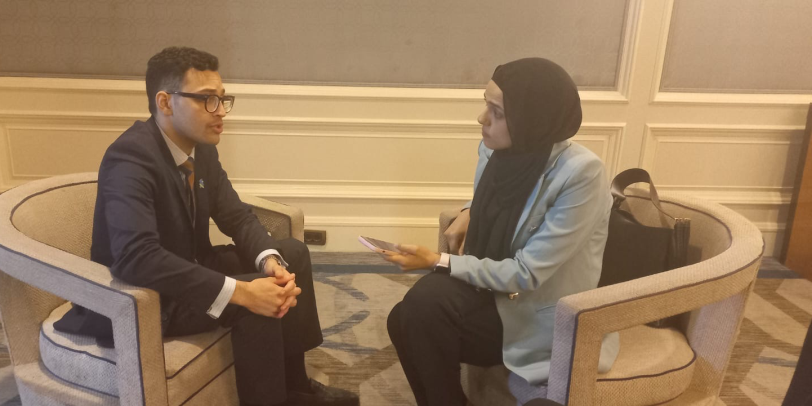 During Badr Al Saraf Interview with Business Today Egypt